

Polyethyleneimine PEI CAS 9002-98-6: Dilution, Dosing & Storage Guide
Nov 23, 2026
A hands-on reference for working with polyethyleneimine in industrial and formulation settings: how to make a working solution, how to introduce it into a system, which additives pair well and which do not, and how to keep the material stable between batches.
On this page
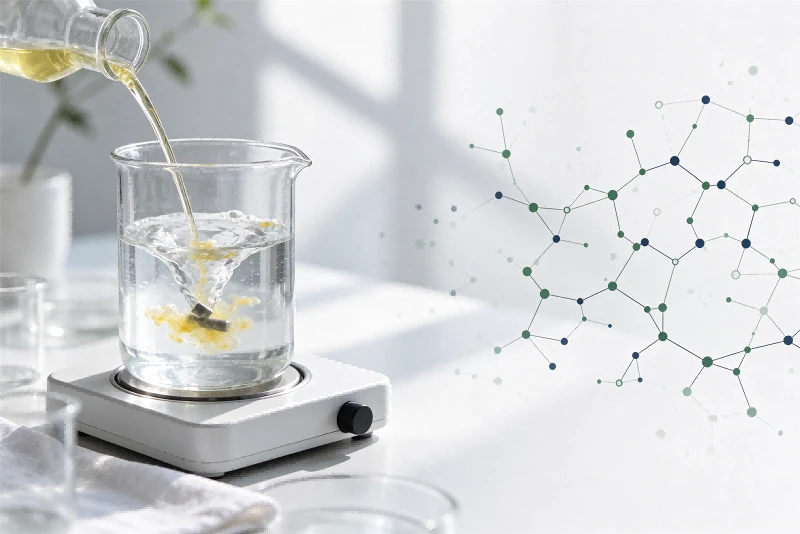
Actual product appearance may vary; replace with the approved on-site photograph before publishing.
⚡ Core insight: Most PEI handling problems trace to three things: the dilution order, a charge mismatch with anionic ingredients, and unsealed storage that lets in moisture and carbon dioxide. Grade choice and reaction mechanisms are covered in our separate selection and mechanism guides; this article stays on the practical side.
Polyethyleneimine, written PEI or polyethylenimine (CAS 9002-98-6), is a cationic branched polymer built from ethyleneimine units. Commercial industrial material is usually a pale yellow viscous liquid or an aqueous solution. Its amine groups carry positive charge under the right pH, which is what lets it bind anionic surfaces, assist flocculation, promote adhesion, and react with epoxy, isocyanate and aldehyde groups. The grade and molecular weight that fit a given process are matched in our PEI grade selection guide; how charge and bridging work is explained in the mechanism guide.
What PEI Is, in One Paragraph
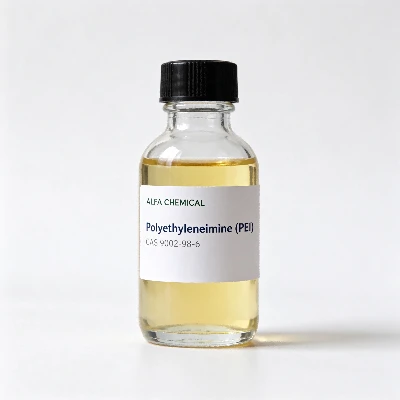
Typical pale yellow PEI liquid. Brand, product name and CAS shown; purity, concentration and lot data appear on the batch COA, not the label.
Branched PEI contains primary, secondary and tertiary amines along the chain, and the share of each type shifts with molecular weight. This mixed amine content is what gives the polymer both reactive sites for covalent crosslinking and charged sites for ionic interaction with anionic substrates. It is soluble in water and in lower alcohols, and is not readily soluble in non-polar solvents such as toluene.
Physical figures are typical catalogue ranges; the shipped lot's appearance, viscosity and amine value are reported on the COA.
Preparing a PEI Working Solution
Concentrated PEI is viscous, and a poor dilution order is the most common reason for gel-like lumps that do not disperse. The reliable sequence is to add PEI slowly to water that is already under agitation, rather than pouring water into the concentrate.
- Start with the measured water and set the mixer running at a steady, non-splashing speed.
- Add PEI slowly in thin streams or portions, letting each portion disperse before the next.
- Continue stirring until the solution is homogeneous. High-molecular-weight grades are thicker and may need more mixing time or gentle warming; confirm the temperature limit for the grade on the SDS.
- Use the diluted solution promptly. A diluted working solution is generally prepared fresh and used within the planned run; do not rely on long-term storage of a weak solution.
Watch out: Water poured into thick PEI can coat the concentrate with a viscous outer layer that traps undispersed material inside. If lumps appear, do not simply raise the dose; back up, reduce the addition rate and extend mixing.
Adding PEI to Your System
How PEI is dosed depends on whether it acts mainly by charge neutralization, by polymer bridging, or through covalent reaction with epoxy, isocyanate or aldehyde groups. The mechanism for a given application is outlined in our mechanism guide; on the operations side, three points matter most.
- Add under controlled mixing. In water treatment and pulp systems, a rapid-mix stage distributes the polymer before a slower flocculation or bonding stage. Skipping the fast dispersion step often shows up as uneven performance rather than a clear failure.
- Titrate the dose rather than fixing it up front. Competing anionic species, salt content and pH all change the optimum. Overdosing high-molecular-weight PEI can reverse particle charge and restabilize what you intended to separate.
- Match the addition point to the reaction. Where PEI reacts chemically with an epoxy or isocyanate resin, stoichiometry and cure schedule matter more than chain length; where it bridges particles or fibers, chain length and mixing energy are the primary levers.
A small-scale jar or bench trial with your actual water, pulp or resin is the standard way to set the starting dose and mixing sequence before moving to production.
Compatibility With Other Ingredients
PEI is positively charged in most working conditions. That charge drives its useful binding, but it also sets the main compatibility rule: direct mixing with strongly anionic components can cause precipitation, viscosity spikes or loss of clarity.
When a formulation already carries other additives, run a compatibility spot test at the planned ratio and pH before scaling up. Record whether clarity, viscosity and any precipitate hold over the expected working time.
Storage and Shelf Stability
PEI is hygroscopic and takes up carbon dioxide from the air. Warm, open storage accelerates oxidation, thickening and a drop in amine reactivity, which is why container discipline matters as much as the product itself.
- Keep sealed. Reseal the container immediately after dispensing; minimize headspace and repeated air exposure.
- Store cool, dark and dry. Follow the temperature range printed on the batch SDS; avoid prolonged high-temperature exposure.
- Watch appearance. Slight darkening can be checked in a small trial; obvious yellowing, crusting or skin formation suggests the material should not be used in high-end adhesion or color-fixation work.
- Do not store diluted solution long term. Prepare working quantities fresh, as covered in the dilution section.
Common Issues and What to Check
Lumps or gel during dilution
Check the addition order. PEI should go into stirred water slowly; review mixer speed and whether the concentrate was added too fast or too cold.
Weak flocculation or bonding
Confirm grade molecular weight matches the mechanism, check pH and competing anions, and retitrate the dose; overdosing can restabilize particles.
Precipitate with other additives
Likely charge mismatch with anionic ingredients. Separate addition points, review sequence, and run a compatibility trial before co-blending.
Thickening or discoloration in storage
Check whether the container was left open or warm, and whether CO₂ or moisture got in. Compare against the batch COA appearance and do not reuse crusted material in sensitive formulations.
Handling and Safety Notes
PEI solutions are alkaline and can irritate skin and eyes. Common GHS categories reported on supplier SDSs include skin irritation, serious eye irritation and harmful-if-swallowed classification; the exact classification, signal word and precautionary statements for your lot are on the SDS.
- Wear chemical-resistant gloves and eye protection, and work in a ventilated area.
- Wash face, hands and exposed skin thoroughly after handling; do not eat, drink or smoke while working with the material.
- Refer to the SDS for first-aid measures, spill handling and disposal. Residual aziridine monomer is controlled in qualified product; ask the supplier for residual-monomer control data if your specification requires it.
Frequently Asked Questions
Q. How should PEI be diluted to avoid lumps?
Add PEI slowly to water that is already being stirred, in portions, and keep mixing until homogeneous. Do not pour water into the concentrated PEI, which can trap undispersed material in a viscous layer. Prepare the diluted solution fresh for the planned run.
Q. Can PEI be mixed with anionic polyacrylamide or anionic dyes?
Direct co-blending is not recommended without a trial. PEI is cationic and anionic components can pair to form precipitate or floc. Use separate addition points, review the sequence, and run a small compatibility test at the planned ratio and pH before scaling up.
Q. Why does PEI thicken or turn darker in the drum?
Unexplained thickening or discoloration usually points to open or warm storage letting in moisture and carbon dioxide, or to oxidation over time. Keep the container sealed and cool/dark, compare appearance against the batch COA, and avoid using crusted or heavily yellowed material in sensitive formulations.
Q. What pH range works for PEI?
A typical PEI solution is alkaline, around pH 10–12 at common dilution. The amines protonate in acidic conditions and become more cationic, but very acidic conditions can affect stability. Confirm the usable pH window for your grade and system in a bench trial rather than assuming a single fixed range.
Q. Can you match the PEI grade and documentation to my current supplier?
Send the molecular weight or viscosity, amine value and application from your current COA. We check whether a standard branched grade matches or whether a custom specification is needed. Batch measured values are reported on the COA, and SDS is provided with the order.
Manufacturing & Supply Note
Alfa Chemical is a manufacturer and supplier of organic, material-science and life-science chemicals, based in Zhengzhou, Henan, China. We support projects from lab-scale evaluation through commercial production and bulk supply.
Within our organic chemicals range, Polyethyleneimine (PEI), CAS 9002-98-6 is supplied with batch-specific COA and SDS on request. For grade selection or a sample discussion, contact our technical team.
Cite this article
Alfa Chemical Technical Team. "Polyethyleneimine (PEI, CAS 9002-98-6): A Practical Guide to Dilution, Dosing, Compatibility and Storage." Alfa Chemical Technical Articles, November 2026.
URL: https://www.alfa-chemical.com/info/polyethyleneimine-pei-9002-98-6-dilution-dosin-103752014.html
Technical parameters are typical catalogue ranges; measured values for your lot are reported on the Certificate of Analysis. This article is for industrial and formulation reference only.
Check the PEI specifications
Review the available forms, packaging and lot documentation on the product page.
Discuss your application
Send your system chemistry, target dose and grade, and our technical team can recommend a starting point.
You Might Also Like
-

CAS 52234-82-9 | 2-((3-Aziridin-1-ylpropionyl)methyl)-2-e...
-

CAS 848133-35-7 | Trans-4-Dimethylaminocrotonic Acid Hydr...
-

CAS 113583-35-0 | 2-Methylsulfonyl-4,6-dimethoxypyrimidine
-
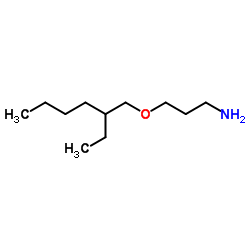
CAS:5397-31-9 | 3-(2-Ethylhexyloxy)propylamine
-

CAS:93964-73-9 | Ethyl 2-amino-3-mercaptopropanoate Hydro...
-

CAS:3470-98-2 | 1-Butylpyrrolidin-2-one