

MPC (CAS 67881-98-5) | 2-Methacryloyloxyethyl Phosphorylcholine | China Manufacturer
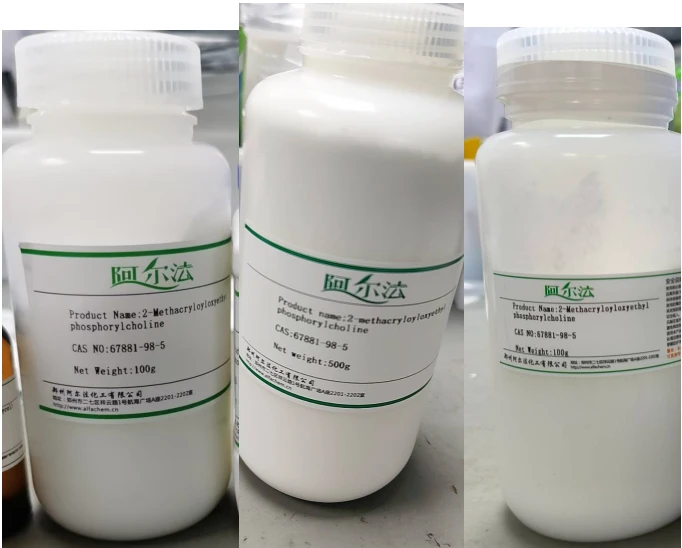
Product Name: 2-Methacryloyloxyethyl Phosphorylcholine (MPC)
Synonym: 2-(Methacryloyloxy)ethyl 2-(Trimethylammonio)ethyl Phosphate
CAS Number: 67881-98-5
EINECS: 417-560-0
Molecular Formula: C₁₁H₂₂NO₆P
Molecular Weight: 295.27 g/mol
Purity: ≥ 98%
Appearance: White to almost white powder
Melting Point: 143–148°C
Storage: -20°C, under inert gas, protect from moisture
Packaging: 0.1g / 0.25g / 1g / 5g / 10g / 25g (custom available)
Lead Time: 3-7 business days from stock
Made in China | COA & SDS provided with every shipment
- Worldwide Delivery
- Quality Assurance
- 24/7 Customer Service
Product Introduction
MPC (CAS 67881-98-5) | Medical-Grade Biomimetic Monomer | Alfa Chemical
Zwitterionic phosphorylcholine for ultra-low protein adsorption and reproducible scale-up.
self-polymerization
for reproducible MW
zwitterionic PC group
biomedical applications
Manufactured by Alfa Chemical Co., Ltd - Zhengzhou, China · COA & SDS Included
⏱️ Response within 12 hours · For material science, biomedical, and R&D use only.
▍🔬 Product Overview
2-Methacryloyloxyethyl Phosphorylcholine (MPC, CAS 67881-98-5) is the gold-standard biomimetic zwitterionic monomer for creating bio-inert, hemocompatible surfaces. Manufactured in-house by Alfa Chemical in Zhengzhou, China, this medical-grade building block features strictly controlled MEHQ inhibitor levels (≤100 ppm) and verified water content (≤0.5%). This ensures reproducible ATRP/RAFT polymerizations and reliable anti-protein adsorption for your coating and drug delivery workflows.
In biomedical material design, the critical risk is not the HPLC purity figure, but the trace moisture and inhibitor depletion during transit. Undefined water content leads to unpredictable molecular weights, while depleted MEHQ causes premature polymerization in the fridge. Alfa Chemical supplies this MPC grade with lyophilization-verified low moisture and precise inhibitor dosing, allowing you to introduce the monomer into your polymerization without re-purifying the starting material.
Key Structural & Functional Features of CAS 67881-98-5:
• Biomimetic PC Headgroup: Structurally mimics the outer leaflet of cell membranes, creating a hydration layer that resists non-specific protein adsorption and platelet adhesion.
• Polymerization-Ready Stability: Strictly stabilized with MEHQ (≤100 ppm) and packaged under Argon to prevent spontaneous self-polymerization during cold-chain shipping.
• Controlled Radical Compatible: The methacrylate group is highly reactive, suitable for conventional free-radical, ATRP, and RAFT polymerizations to precisely tune molecular weights.
The zwitterionic MPC hydration layer prevents protein and cell adhesion, ensuring long-term hemocompatibility.
▍📝 Application Notes & Process Control
MPC is a hygroscopic, heat-sensitive monomer. Proper handling and polymerization conditions are critical for achieving the desired biocompatible polymer properties. The guidelines below are for reference only, not specification limits.
⚙️ Polymerization
Free-radical polymerization in aqueous or alcoholic media. ATRP and RAFT are suitable for controlled molecular weight. Typical initiators: AIBN, APS/TEMED, or photoinitiators.
💧 Solvent
Soluble in water (≥100 mg/mL), DMSO (100 mg/mL), and methanol. Prepare fresh solutions and use within the working day due to hygroscopic nature.
⛓️ Copolymerization
Commonly copolymerized with hydrophobic monomers (e.g., n-butyl methacrylate) to form amphiphilic polymers for surface coatings and drug delivery.
❄️ Storage & Handling
Store at -20°C under inert gas. Protect from moisture and heat. Hygroscopic; use immediately after opening. Shelf life: 3 years under recommended storage.
⚙️ Ready to test this batch in your ATRP/RAFT reaction?
Request a 0.1g Sample →▍🏥 Applications of MPC (CAS 67881-98-5)
MPC polymers are used across biomedical, ophthalmological, and electrochemical applications. The list below summarizes where it is typically found and what it contributes.
▍📋 Product Specifications
Values below are the release specifications for the research-grade biomimetic monomer. Batch-specific measured values (including HPLC purity, KF water content, and NMR identity) are stated on the COA.
📄 Need to verify these parameters against your formulation?
Request Batch-Specific COA →▍📄 COA & SDS Documentation
Every shipment of MPC (CAS 67881-98-5) includes a batch-specific COA and a GHS-format SDS. The COA lists actual measured values for the specific lot, not specification ranges. Sample documents are available on request before purchase.
📄 COA (Per Batch)
Purity by HPLC · Appearance · Melting Point · Moisture Content · Identity (NMR)
Actual measured values for the specific lot.
📑 SDS (GHS Format)
Identification · Hazards · First Aid · Fire Fighting · Handling · Storage · Exposure Control · Toxicology
Available in English and Chinese.
▍📦 Packaging & Shipping
MPC is hygroscopic and heat-sensitive. All packaging is sealed under inert gas to prevent moisture uptake during storage and transport. R&D sample sizes and custom packaging are available.
R&D Samples
0.1g / 0.25g / 1g / 5g
Glass vials under inert gas
Bulk Orders
10g / 25g / custom
Sealed under inert gas
Cold-Chain Shipping
Dry ice or gel packs for international delivery
Dispatch
3–7 business days from stock
DHL / FedEx / air freight
▍🏆 Why Choose Alfa Chemical?
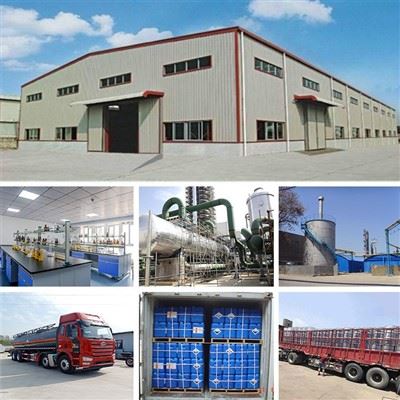
Inside Our Zhengzhou Production Facility
01 / In-House Control
We do not outsource our synthesis. Lyophilization and precise MEHQ dosing are handled by our own production team, not a third-party distributor.
02 / Analytical Truth
We test for exactly what matters to a polymer chemist. Every COA reports actual measured KF water, MEHQ, and intact NMR structural data.
03 / True Scale-Up
Whether you need a 0.1g R&D vial or a 25g bulk pack, it originates from the same production campaign. No hidden source switching.
"We understand the frustration of failing an ATRP/RAFT reaction due to trace moisture. That is why we refuse to sell generic catalog items. We only ship MPC that we know will dissolve and polymerize reproducibly."
▍💡 Frequently Asked Questions
MPC is used to create biocompatible, antifouling surfaces for medical devices, contact lenses, biosensors, and drug delivery systems. Its phosphorylcholine headgroup mimics cell membranes, resisting protein adsorption and cell adhesion.
MPC can be polymerized via conventional free-radical polymerization, ATRP, or RAFT. Common initiators include AIBN, APS/TEMED, or photoinitiators. It is often copolymerized with hydrophobic monomers like n-butyl methacrylate.
≥98% by HPLC. COA reports actual measured purity, appearance, melting point, and moisture content for the specific batch.
Store at -20°C under inert gas, protected from moisture and heat. MPC is hygroscopic; use immediately after opening. Shelf life is 3 years under recommended storage.
R&D samples: 0.1g–25g glass vials. Stock dispatch in 3–7 business days. Custom packaging available on request.
Yes. COA ships with every order. SDS available on request. Sample COA and SDS available before purchase.
Ready to ensure reproducible polymerization?
Tell us your polymerization method (ATRP/RAFT/Free-radical) and target application. Our chemists will double-check the batch-specific COA, moisture data (KF), and NMR spectrum against your requirements before shipping.
⏱️ Response within 12 hours · COA & SDS available upon request
▍🔗 Related Resources
Support & Documentation
About Alfa Chemical
Alfa Chemical Co., Ltd is based in Zhengzhou, China. We supply zwitterionic monomers, organic chemicals, and material science products for global R&D and industrial customers. For documentation or technical support, visit our contact page.
Hot Tags: MPC (CAS 67881-98-5) | 2-Methacryloyloxyethyl Phosphorylcholine | China Manufacturer, price, quotation, discount, in stock, for sale, Material Science