


Cetylpyridinium Chloride (CPC) | CAS 123-03-5 | Phase Transfer Catalyst & Surfactant | China Manufacturer
Product Name: Cetylpyridinium Chloride (CPC) Monohydrate
Synonyms: Hexadecylpyridinium Chloride;1-Hexadecylpyridinium Chloride
CAS Number: 123-03-5
Molecular Formula: C21H38ClN
Molecular Weight: 339.99 g/mol
Purity (HPLC): ≥ 99.0% (Typical, confirm on COA)
Appearance: White to pearl powder
Melting Point: 80-86°C
Primary Function: Phase transfer catalyst (PTC) and industrial surfactant.
Packaging: 500g to 25kg (custom available).
Worldwide delivery via DHL/FedEx/Sea.
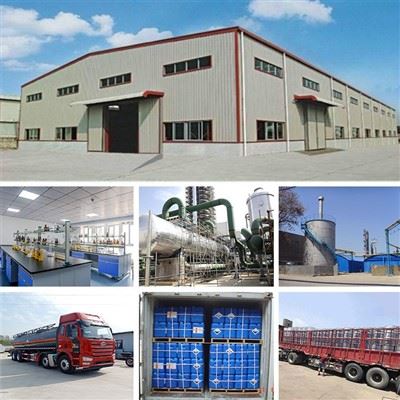
Manufacturer: Alfa Chemical (Zhengzhou, China).
COA & SDS provided. Sample available upon request.
- Worldwide Delivery
- Quality Assurance
- 24/7 Customer Service
Product Introduction
Cetylpyridinium Chloride (CPC) | CAS 123-03-5 | Industrial Grade
High-purity quaternary ammonium salt for phase transfer catalysis and surfactant systems.
Final terms are confirmed upon order and may vary by volume, destination, and contract type.
Manufactured by Alfa Chemical - Zhengzhou, China
Product Overview
Cetylpyridinium Chloride (CPC, CAS 123-03-5) is an industrial-grade cationic quaternary ammonium salt. Its primary function is to act as a phase transfer catalyst (PTC) for transferring reactive anions from aqueous to organic phases, and as a cationic surfactant for emulsification and wetting in harsh industrial systems.
Why control impurities in CPC? Residual free amines and moisture can directly interfere with metal coordination, reducing phase transfer efficiency or poisoning downstream catalysts. We test every batch for ≥99.0% assay (HPLC), ≤20 ppm heavy metals, and ≤0.5% loss on drying. Alfa Chemical manufactures this grade in Zhengzhou, China, providing the actual analytical data on the COA so you can adjust your stoichiometry with confidence.
Scale-up without reformulation. Whether you need 500g for analytical testing or 25kg for production, the CAS 123-03-5 material comes from the identical synthesis line. The surface activity (stable at pH 4–10) and phase transfer performance you validate at the bench hold true at scale.
Key Properties & Advantages
Anti-Caking & Flowability
CPC monohydrate is highly hygroscopic. High moisture causes caking, clogging automated feeding systems and leading to inaccurate weighing.
Optimized drying guarantees Loss on Drying (LOD) ≤0.5%. The powder stays free-flowing in the drum, ensuring smooth handling.
Ultra-Low Free Amine
Residual free amine acts as a nucleophile, consuming your key substrates in PTC reactions and skewing the pH of aqueous systems.
Strictly controlled quaternization minimizes free amine to trace levels, eliminating side reactions and ensuring exact stoichiometry.
Superior Alkaline Stability
Traditional TBAB undergoes Hofmann elimination and completely loses catalytic activity in hot alkaline conditions.
CPC is structurally stable across a pH range of 4 to 10 and up to 80°C, making it the preferred PTC for high-pH systems.
Predictable Phase Separation
Highly active cationic surfactants can cause stubborn emulsions during post-reaction workup, trapping your product in the aqueous layer.
High-purity chain length distribution and actual heavy metals data (≤20 ppm) offer predictable partitioning. We also provide demulsifier selection guidance.
Want to validate these properties in your specific formulation?
Request Technical Data →Detailed Specifications
* CMC and Particle Size are typical values based on internal R&D testing. All values are typical. Batch-specific analytical data is provided on the Certificate of Analysis (COA). Final terms are confirmed upon order.
Want to check the actual HPLC chromatogram and heavy metals data for the current lot?
Request Batch COA →Why Choose CPC over Traditional PTCs?
When selecting a phase transfer catalyst, cost per mole is not the only metric. TBAB is cheaper but degrades in hot alkaline systems. Standard CPC grades often contain high free amines. Here is how our industrial grade compares:
Industrial Applications
Why Choose Alfa Chemical
CPC is a mature product, but many suppliers are just repackaging imported material or selling lower-grade technical products. As a direct manufacturer based in Zhengzhou, China, Alfa Chemical controls the quaternization, purification, and drying processes in-house. We do not just sell chemicals; we provide batch-consistent raw materials that secure your production line.
We don't hide behind a generic spec sheet. The COA includes the actual HPLC chromatogram and heavy metals testing results for the exact lot you receive. You see the real numbers before you mix.
Your analytical sample and your 25kg drum come from the identical production batch loop. The phase transfer efficiency and moisture level you validate at 500g are guaranteed to hold true at scale.
Struggling with emulsion separation in your PTC process, or need advice on biocide formulation compatibility? Our in-house R&D team can share starting-point protocols to save your lab time.
Packaging & Shipping
Lab & Analytical Packs (500g – 1kg)
- Secure Packaging: Sealed in moisture-barrier aluminum foil bags or HDPE bottles to prevent caking.
- Fast Logistics: Shipped via DHL/FedEx express (typically 3–5 days transit).
- Documents: COA & SDS included in every parcel.
Bulk & Production Packs (25kg)
- Fiber Drums: Double polyethylene inner liners provide a strict moisture barrier for bulk storage.
- Global Freight: Shipped by air or sea freight based on your target cost and timeline.
- Export Ready: Full documentation (Invoice, Packing List, COA, SDS) provided for smooth customs clearance.
Have specific packaging or labeling requirements (e.g., nitrogen blanketing, custom fill)?
Discuss Packaging Options →Frequently Asked Questions
Yes, in most high-pH or high-temperature systems, CPC is superior to Tetrabutylammonium Bromide (TBAB). TBAB undergoes Hofmann elimination under strongly alkaline conditions, losing catalytic activity. CPC is structurally stable. However, because CPC is highly surface-active, it may cause stable emulsion formation during post-reaction extraction. Using a demulsifier or slight temperature adjustments is recommended.
This is the monohydrate form (CAS 123-03-5 standard). It is highly hygroscopic. If moisture exceeds 0.5%, the powder will cake, making it difficult to weigh accurately and potentially introducing unwanted water into your non-aqueous reaction. Our strict LOD ≤0.5% ensures free-flowing handling and reproducible stoichiometry.
At typical biocide dosages (10–50 ppm), CPC exhibits moderate foaming. In high-agitation systems like cooling towers or aeration tanks, this can cause foam buildup. It is usually mitigated by blending with anti-foaming agents (e.g., silicone emulsions) or using defoaming dosing equipment. In closed-loop oilfield injection systems, foaming is generally not an issue.
This product is manufactured as a technical/industrial grade. It does not carry cosmetic-grade (e.g., EP/USP) certifications or microbial testing. For personal care applications, you must either validate the batch yourself or source a pharmacopeia-grade CPC. We supply this grade strictly for industrial synthesis and water treatment.
Standard MOQ is 500g for analytical evaluation. Bulk packaging starts at 1kg. Stock lots typically ship within 3–7 business days. Standard payment is T/T. Final lead time, pricing, and payment terms (e.g., L/C for bulk) are confirmed upon order based on specific volume and destination.
Yes. We support custom fill sizes and customer-labeled containers (OEM) upon request. Because CPC requires moisture protection, we use HDPE bottles or double-lined fiber drums. Specify your required fill size and label requirements at inquiry.
Still unsure which PTC fits your reaction?
Our R&D team can review your specific biphasic system, temperature, and substrate to recommend the optimal catalyst and dosage.
Ready to validate CPC in your industrial process?
Tell us your application (PTC or surfactant). We will send the current lot COA with actual heavy metals and assay data, and quote a sample from the same line that fills your bulk drums.
Response within 12 hours · COA & SDS available
Related Resources
About Alfa Chemical
Alfa Chemical is a manufacturer and supplier of specialty chemicals and quaternary ammonium compounds based in Zhengzhou, Henan, China. The CPC line is produced in-house, with HPLC purity, water content, and heavy metals reported per lot. For formulation support or document requests, visit Contact Us.
Disclaimer: For industrial and laboratory use only. Not for food, pharmaceutical, or cosmetic applications without prior specification confirmation. CPC is a quaternary ammonium salt and should be handled according to the SDS. All values are typical. Because heavy metals and water content vary by lot, batch-specific data must be verified on the Certificate of Analysis. Final terms are confirmed upon order and may vary by volume, destination, and contract type. Buyers are responsible for verifying export classification and import regulations for their jurisdiction.
Hot Tags: Cetylpyridinium Chloride (CPC) | CAS 123-03-5 | Phase Transfer Catalyst & Surfactant | China Manufacturer, price, quotation, discount, in stock, for sale


