



Sodium 1-Hexanesulfonate | CAS 2832-45-3 | C6 Ion-Pair Reagent | China Manufacturer
1. Product Name: Sodium 1-Hexanesulfonate
2. CAS Number: 2832-45-3
3. Synonym: Sodium hexanesulfonate; 1-Hexanesulfonic acid sodium salt; Sodium hexane-1-sulfonate
4. Molecular Formula: C6H13NaO3S
5. Molecular Weight: 188.22 g/mol
6. EINECS Number: 220-601-3
7. Purity (HPLC): ≥ 98.0% (Area-normalized, 210 nm)
8. Appearance: White crystalline powder or flakes
9. Hygroscopic: Yes - store under inert gas, protect from moisture
10. Storage: 15-25 °C, inert atmosphere, sealed
- Worldwide Delivery
- Quality Assurance
- 24/7 Customer Service
Product Introduction
Sodium 1-Hexanesulfonate | CAS 2832-45-3 | C6 Ion-Pair Reagent | China Manufacturer
COA reports actual value
low baseline for gradient HPLC
times between batches
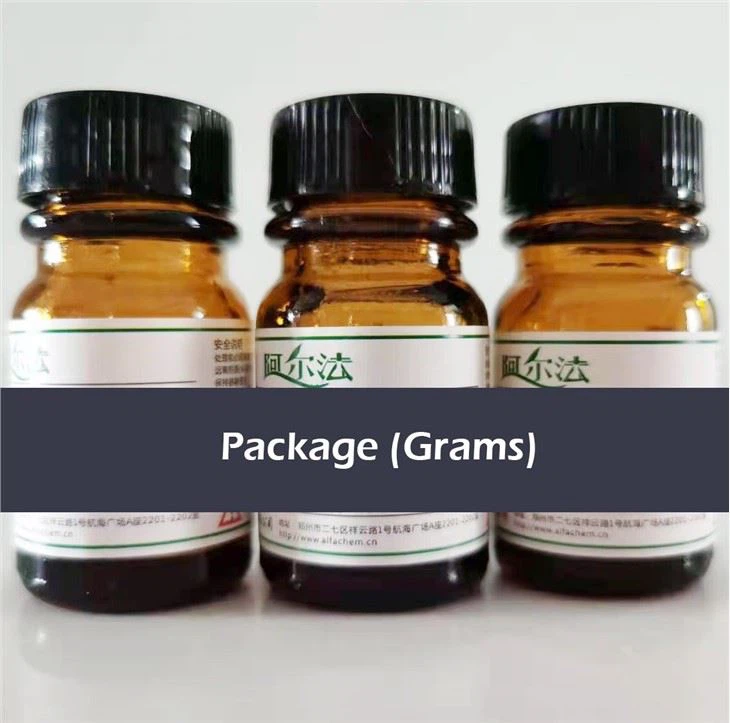
Small lab bottles available.
Manufactured by Alfa Chemical Co., Ltd - Zhengzhou, Henan, China · Response within 12 hours
▍Product Overview
Sodium 1-Hexanesulfonate (CAS 2832-45-3) is a C6 straight-chain alkyl sulfonate used as an ion-pair reagent in reversed-phase HPLC and as an anionic surfactant in specialty formulations. C6 sits at the practical midpoint: enough hydrophobicity to retain moderately polar bases, without the long equilibration times that C7/C8 impose on gradient methods. Many commercial C6 grades carry residual inorganic salts or UV-active organics that cause baseline drift at 200-220 nm or shift retention times. Alfa Chemical addresses this by supplying a low-UV grade with batch-specific HPLC purity, UV transmittance, and pH documented on the COA, so method development starts from a stable baseline.
Manufactured at our Zhengzhou site, this grade undergoes a purification sequence specifically designed to strip these trace impurities. The result is a consistent reagent that transfers smoothly to your QC lab: when you buy a 1 g method-development pack and scale to a 25 kg drum, the UV baseline and retention behavior remain the same, because they come from the same controlled process.
👉 Read the full technical guide: Sodium 1-Hexanesulfonate in HPLC Method Development
▍Specifications & Identity
Values below are the release specification for the low-UV HPLC grade. Formulation relevance and test methods are noted in parentheses. Batch-specific measured values are stated on the COA.
[Na+].CCCCCCS([O-])(=O)=O
InChI: 1S/C6H14O3S.Na/c1-2-3-4-5-6-10(7,8)9;/h2-6H2,1H3,(H,7,8,9);/q;+1/p-1
▍Ion-Pair Reagent Selection
Swipe left or right to view the full table ↔
Method scouting often hits a wall: C5 under-retains moderately polar bases, while C7 or C8 adds hours to gradient equilibration. The C6 chain is the practical middle ground. If you are optimizing a method, use the table below to see how C6 compares to adjacent chain lengths, and reach out if you need a retention comparison based on your specific column and mobile phase.
Relative retention and equilibration ranges are typical literature behavior compiled from public chromatographic comparisons. They are not batch-specific measured values for this product. Column chemistry, mobile-phase pH, and organic modifier will shift the actual numbers.
Stoichiometry and mobile-phase adjustment
A common starting point for C6 ion-pairing is 5-10 mM in the aqueous portion of the mobile phase, with pH adjusted to 2.5-3.0 using phosphoric acid or trifluoroacetic acid. The low pH suppresses residual silanol ionization and keeps basic analytes protonated for pairing. If the method was transferred from a C5 or C7 reagent, do not keep the same molarity and expect the same retention: the C6 chain sits between them in hydrophobicity, so the pairing concentration and organic modifier ratio usually need re-optimization, not a direct swap.
For a rough molar conversion, 1 g of C6 sulfonate (MW 188.22) dissolves in 1 L to give approximately 5.3 mM. If a published method specifies 0.005 M and you are weighing the sodium salt rather than diluting an ampule, use the measured assay on the COA; a 97.5% assay shifts the actual molarity by about 2.5%, which is enough to change retention in a tightly tuned gradient.
▍Process Control & Quality
Most C6 ion-pair issues in gradient HPLC trace back to purification, not synthesis. If inorganic sulfates are not fully stripped, retention times shift between batches; if UV-active organics remain, you get baseline drift at low wavelengths. Our production process targets these two impurities directly before the product is dried and released.
Sulfonation with phase-transfer catalysis
Sodium sulfite and bromohexane are reacted under reflux in the presence of a phase-transfer catalyst. The catalyst is what brings the inorganic sulfite into contact with the organic halide; without it, the reaction is slow and unreacted bromohexane can survive into the crude. The reflux endpoint is a clear, non-stratified reaction mass, which is a practical in-process checkpoint for conversion.
Purification before drying
Water is stripped under reduced pressure, the solid is extracted with alcohol, and the crude is recrystallized before vacuum drying. This sequence targets two different impurities: inorganic salts stay in the aqueous phase, while less polar UV-active organics are separated by the alcohol extraction and recrystallization. Skipping recrystallization may still give a white powder, but the 200 nm transmittance and baseline noise are where the difference shows up.
Drying and batch release
Vacuum drying at controlled temperature removes residual moisture without thermal degradation. The release panel pairs HPLC purity with UV transmittance, pH, loss on drying, and appearance. A COA that reports only ≥98% without UV data does not tell a method development group whether the batch is suitable for a gradient run at 200 nm.
▍Applications
Sodium 1-Hexanesulfonate (CAS 2832-45-3) serves two distinct roles depending on the application environment. In analytical chemistry, it functions as an ion-pair reagent to control the retention and peak shape of basic analytes in reversed-phase HPLC. In materials and formulation science, it acts as a short-chain anionic surfactant that modifies interfacial tension without affecting the bulk properties of the system. The scenarios below outline where this low-UV grade is most commonly deployed across QC labs and formulation development.
🔬 Ion-pair Reversed-phase HPLC
Used as the ion-pair reagent in the aqueous mobile phase for moderately polar basic analytes. The C6 chain increases retention enough to resolve early peaks, but avoids the long equilibration times that C8 reagents impose on gradient runs.
Typical use: Method scouting and general impurity profiling where a C7 method has not yet been fixed.
💡 Low-UV Gradient Methods
When detection wavelength drops below 220 nm, low-grade C6 impurities directly raise baseline absorbance and force you to reduce the gradient slope. This low-UV grade ensures the reagent itself does not interfere with the signal.
Typical use: Simultaneous determination of water-soluble vitamins, preservatives, and trace analytes by stability-indicating HPLC.
🧼 Anionic Surfactant Systems
Short-chain sulfonates modify interfacial behavior in emulsion and starch-based adhesive systems. Published work shows a short-chain sulfonate alters shear strength and viscosity without phase separation.
Typical use: Surfactant additive screening in waterborne adhesives and emulsion polymerization formulations.
▍Why Alfa Chemical for CAS 2832-45-3
Alfa Chemical supplies Sodium 1-Hexanesulfonate (CAS 2832-45-3) as a manufacturer, not a trading intermediary. Three things follow from that: the batch COA carries UV transmittance data rather than purity alone, the 1 g lab pack and the 25 kg drum come from the same production line, and the Zhengzhou site controls sulfonation, purification, and drying in-house. The three points below explain what each of these means for a method development group or a procurement team evaluating this grade.
🏭 Manufacturer Direct, Not a Trader
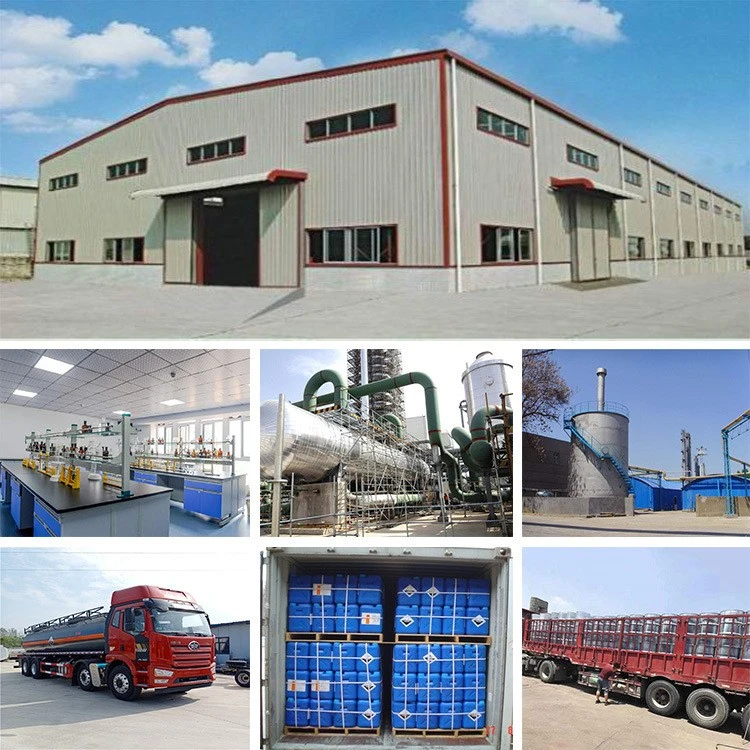
Alfa Chemical manufactures this grade at its Zhengzhou, Henan site, where the sulfonation, purification, and drying steps are controlled in-house. The site operates a development laboratory and pilot-scale workshop alongside production, which is what allows a 1 g method-development pack and a 25 kg bulk drum to come from the same grade and the same production line. A trading company sources from multiple factories and typically cannot confirm the production line behind a specific pack.
📊 Batch COA With the Data Method Transfer Needs
The COA for this grade reports measured HPLC purity (area-normalized, 210 nm), UV transmittance at 200, 220, and 250 nm, pH, loss on drying, and appearance for the specific batch. It is not a generic specification sheet copied from a catalogue. For a method development group transferring a C6 ion-pair method, the UV transmittance values are the difference between knowing the batch is suitable for a 200 nm gradient and finding out after equilibration. SDS is supplied with the shipment.
📦 1 g Lab Pack to 25 kg Drum, Same Grade
Standard packs run from 1 g and 5 g glass bottles for method scouting, through 100 g and 1 kg, to 25 kg fiber drums. The grade and production line stay the same as the pack size scales up, so the lab is not switching to a different production source when it moves from a 1 g bottle to a 100 g order. MOQ for bulk packs is negotiable based on pack format and order volume; trial quantities from stock are typically 3-7 days.
▍Packaging & Shipping
🧪 Lab & Research Packs
Supplied in amber glass bottles or poly bottles to protect the hygroscopic powder from moisture and light during method development and small-scale testing.
- 1 g / 5 g / 25 g (Amber glass bottle)
- 100 g (Poly bottle or sealed foil bag)
- Shipped via DHL / FedEx with tracking
🏭 Bulk & Production Packs
Supplied in moisture-barrier fiber drums or heavy-duty foil bags, ensuring the low-UV grade remains stable during bulk transport and warehouse storage.
- 1 kg (Foil bag inside outer carton)
- 25 kg (Fiber drum with double PE liners)
- Air / Sea freight with full export documentation
▍FAQ
Q: My method uses C7 sulfonate. Can I replace it with this C6 grade at the same molarity?
No. C6 is less hydrophobic than C7; the relative retention factor is roughly 2-3x for C6 versus 5-8x for C7 in typical comparisons. Keeping the same molarity usually shortens retention and may lose resolution. Re-optimize the ion-pair concentration and organic modifier ratio rather than doing a direct molar swap.
Q: What does the UV transmittance specification actually mean for my method?
It is measured on a 0.005 M aqueous solution in a 1 cm cell. At 200 nm, ≥70% transmittance means the reagent itself does not absorb excessively at the low end of the UV range. If your detection wavelength is 210-220 nm, the 220 nm ≥90% specification is the more directly relevant one. A COA without UV data does not allow this check.
Q: How should I store sodium 1-hexanesulfonate CAS 2832-45-3 to avoid moisture pickup?
Store at 15-25 °C in a sealed container under inert atmosphere, protected from moisture. The loss on drying specification is ≤2.0% (120 °C, 4 h, vacuum). For a 1 g lab bottle, aliquot what you need and reseal the stock promptly; repeated opening in a humid lab is the usual cause of caking.
Q: What is the MOQ and lead time for a trial pack?
The smallest standard lab pack is 1 g in a glass bottle. Trial quantities from 1 g to 100 g are available from stock. Bulk orders start at 1 kg (foil bag) and 25 kg (fiber drum). MOQ for bulk packs is negotiable based on pack format and order volume; lead time for standard packs is typically 3-7 days from stock.
Q: Can you provide COA and SDS before I place an order?
Yes. A representative COA and the current SDS are available on request. The SDS covers identity, handling, storage, and transport classification for CAS 2832-45-3. For a specific batch, the COA is issued with the shipment and includes measured HPLC purity, UV transmittance, pH, loss on drying, and appearance.
Q: Can you provide a proforma invoice or documentation for institutional procurement?
Yes. Proforma invoices and standard export documentation are available. Specific institutional requirements, including PO format, vendor registration forms, and shipping documents, can be reviewed before order confirmation; some requirements depend on the institution and order value. Custom pack sizes and private-label packaging are assessed case by case.
Request a lab sample or bulk COA for CAS 2832-45-3
State your application and detection wavelength so the batch COA can be checked against your method before shipment.
Response within 12 hours · COA and SDS available
▍Explore Related Products & Technical Guides
About this reagent: Sodium 1-Hexanesulfonate (CAS 2832-45-3) low-UV grade for HPLC method development.
▍About Alfa Chemical
Alfa Chemical Co., Ltd is based in Zhengzhou, Henan, China, and supplies sodium hexanesulfonate CAS 2832-45-3 and related ion-pair reagents for research, development, and industrial manufacturing. For current batch availability or a technical discussion on ion-pair selection, connect with our chemical specialists here.
For research and development use only. Not for human or veterinary use.
Hot Tags: Sodium 1-Hexanesulfonate | CAS 2832-45-3 | C6 Ion-Pair Reagent | China Manufacturer, price, quotation, discount, in stock, for sale, Material Science