




CAS 9016-87-9 | Polymethylene Polyphenyl Polyisocyanate (PAPI) | China Manufacturer
Product Name: Polymethylene Polyphenyl Polyisocyanate (PAPI)
CAS Number: 9016-87-9
Synonym: Polymeric MDI; PMDI; MDI Polymer; PAPI
Chemical Type: Aromatic polyisocyanate (MDI oligomer mixture)
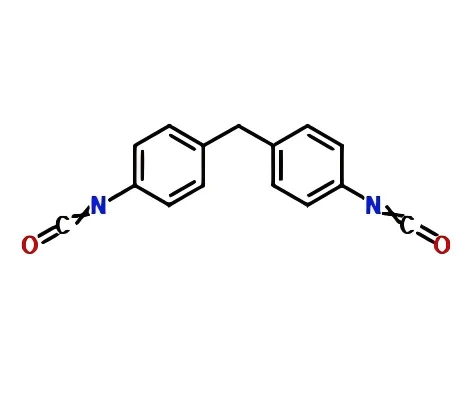
Monomer Basis: MDI (CH₂(C₆H₄NCO)₂)
Molecular Weight: Variable (oligomer mixture, Mn ~340–400)
NCO Content: 30.0 – 32.0 %
Viscosity (25°C): 150 – 250 mPa·s
Functionality: 2.6 – 2.9 (average)
Packaging: 250 kg drum / 1000 kg IBC tote (custom available)
MOQ: 250 kg (drum) / 1000 kg (IBC)
Lead Time: 3–7 business days from stock
Origin: Zhengzhou, China | COA & SDS with every shipment
Worldwide Delivery: DHL / FedEx / air / sea
- Worldwide Delivery
- Quality Assurance
- 24/7 Customer Service
Product Introduction
PAPI (Polymeric MDI) (CAS 9016-87-9) | Polyurethane Raw Material | China Manufacturer
High NCO Content · 150–250 mPa·s · Rigid & Flexible PU Foam · Coatings & Adhesives · Industrial Grade
NCO CONTENT
30.0–32.0%
Typical, batch-specific on COA
VISCOSITY (25°C)
150–250 mPa·s
Brookfield, typical
FUNCTIONALITY
2.6–2.9
Average isocyanate
PACKAGING
250–1000 kg
Drum / IBC
Request COA/SDS | Technical Questions? Visit FAQ
Response within 12 hours · COA & SDS with every shipment For industrial use only. Handle with appropriate PPE and ventilation.
Product Overview: PAPI (CAS 9016-87-9)
Polymethylene Polyphenyl Polyisocyanate (PAPI), CAS 9016-87-9, also known as Polymeric MDI (PMDI), is an aromatic polyisocyanate that serves as the cornerstone raw material of the polyurethane industry. It is a mixture of diphenylmethane diisocyanate (MDI) isomers and higher-functional oligomers, with an average functionality typically between 2.6 and 2.9. Alfa Chemical manufactures this grade at our Zhengzhou, China facility.
PAPI's high NCO content (typically 30.0–32.0%) and moderate viscosity (typically 150–250 mPa·s) make it compatible with a wide range of rigid polyether and polyester polyols. The higher functionality compared to pure MDI provides additional crosslinking density, which translates to improved dimensional stability, thermal insulation performance, and mechanical strength in the final polyurethane product.
Our production holds NCO content within 30.0–32.0%, viscosity within 150–250 mPa·s, and acidity at ≤0.05%. Batch-specific values are reported on the COA shipped with every order. Annual capacity is sufficient for both bulk industrial quantities and consistent long-term supply.
If you are formulating rigid PU foam, flexible foam, coatings, adhesives, or elastomers, request a sample and test it against your existing polyol system. For a deeper look at how PAPI behaves in different formulations - NCO index, viscosity drift during storage, and selection points between PAPI and pure MDI - read our technical guide:PAPI in Polyurethane Formulations: Practical Behavior and Selection Points. This product is intended for industrial use only.
Structure & Identity

MDI oligomer mixture with varying chain lengths.
| Item | Value |
|---|---|
| Synonym |
Polymeric MDI; PMDI; MDI Polymer; PAPI
|
| Monomer Basis |
MDI: CH₂(C₆H₄NCO)₂
|
| Molecular Weight |
Variable (oligomer mixture, Mn typically ~340–400)
|
| CAS Number |
9016-87-9
|
| Chemical Class |
Aromatic polyisocyanate (MDI oligomer)
|
Industrial Applications of PAPI
Each application below maps a real formulation challenge to the specific property of PAPI that addresses it.
🏗️ Rigid PU Foam for Insulation
Challenge:
Building insulation panels, spray foam, and refrigeration equipment need rigid foam with high thermal resistance and dimensional stability over decades of service.
How PAPI helps:
The average functionality of 2.6–2.9 provides higher crosslink density than pure MDI, improving compressive strength and insulation performance. Compatible with rigid polyether and polyester polyols.
Result:
Rigid foam with excellent thermal insulation, dimensional stability, and long-term aging performance.
🛋️ Flexible & Semi-Rigid Foam
Challenge:
Furniture cushions, automotive seats, and packaging foams require controlled flexibility, resilience, and fast demold times for high-throughput production.
How PAPI helps:
The high NCO content drives fast reaction with polyols. The mixed oligomer composition allows formulators to fine-tune hardness and resilience by adjusting the index.
Result:
Foam with consistent cell structure, fast demold, and tunable hardness for diverse comfort applications.
🎨 Coatings, Adhesives & Sealants
Challenge:
Industrial adhesives and protective coatings need strong adhesion to metal and concrete, fast cure, and resistance to moisture and chemicals.
How PAPI helps:
Reacts with hydroxyl-functional resins to form crosslinked polyurethane networks with excellent adhesion and chemical resistance. Low acidity (≤0.05%) ensures consistent cure speed.
Result:
Durable adhesives and coatings with strong substrate bonding, fast cure, and long service life.
⚙️ Elastomers & Structural RIM
Challenge:
Structural RIM parts, automotive bumpers, and industrial rollers require high impact strength, abrasion resistance, and dimensional accuracy.
How PAPI helps:
The aromatic structure provides high modulus and heat resistance. The oligomer mixture allows formulators to adjust hard segment content for the target flexural modulus.
Result:
High-performance elastomers and RIM parts with excellent mechanical properties and thermal stability.
Safety & Handling
PAPI is an isocyanate and must be handled with appropriate engineering controls and personal protective equipment. The following GHS classification applies.
GHS Hazard Statements
H315 (Skin irritation), H317 (Skin sensitization), H319 (Eye irritation), H332 (Harmful if inhaled), H334 (Respiratory sensitization), H335 (Respiratory irritation), H351 (Suspected of causing cancer)
Handling Precautions
Wear chemical-resistant gloves, safety goggles, and protective clothing. Use mechanical exhaust ventilation. Avoid breathing vapor or mist. Provide local exhaust ventilation to control airborne levels below exposure guidelines.
Storage & Reactivity
Store in sealed containers under inert gas at 15–35°C. PAPI reacts with water, alcohols, and strong oxidizing agents. Moisture-proof storage is required to prevent pressure buildup in sealed containers.
Technical Specifications
Typical values for industrial-grade PAPI. Batch-specific COA reports actual measured values for the specific lot.
| Item | Specification |
|---|---|
| Product Name | Polymethylene Polyphenyl Polyisocyanate (PAPI) |
| Synonym | Polymeric MDI; PMDI; MDI Polymer; PAPI |
| CAS Number | 9016-87-9 |
| Chemical Type | Aromatic polyisocyanate (MDI oligomer mixture) |
| Monomer Basis | MDI: CH₂(C₆H₄NCO)₂ |
| Molecular Weight | Variable (oligomer mixture, Mn typically ~340–400) |
| NCO Content | Typically 30.0 – 32.0 % (batch-specific on COA) |
| Viscosity (25°C) | Typically 150 – 250 mPa·s (batch-specific on COA) |
| Functionality | Typically 2.6 – 2.9 (average) |
| Acidity (as HCl) | Typically ≤ 0.05 % |
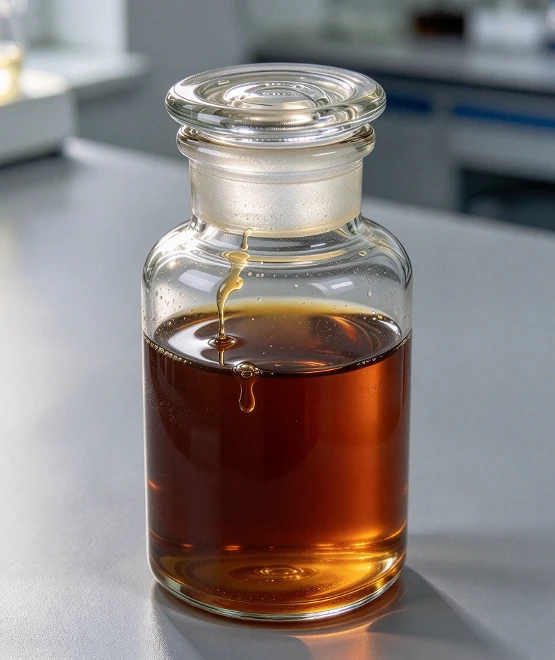
| Appearance | Brown clear liquid |
| Density (25°C) | Typically ~1.2 g/mL |
| Flash Point | > 200°C (closed cup) |
| Storage | Inert gas, dry, 15–35°C |
| Shelf Life | Typically 12 months (sealed, under recommended storage) |
| Packaging | 250 kg drum / 1000 kg IBC tote (custom available) |
| Documents | COA, SDS with every order |
Manufacturing & Quality Control at Our Zhengzhou Facility
PAPI is manufactured at our Zhengzhou facility through controlled phosgenation and distillation. Each batch is tested for NCO content, viscosity, acidity, and density before release.
Batch Testing
NCO content, viscosity, acidity, and density measured per batch. COA issued with every shipment.
Acidity Control
Acidity controlled to typically ≤0.05% to ensure consistent cure speed and storage stability.
Batch Traceability
Each batch assigned a unique lot number. Retained samples archived for 12 months.
Packaging & Shipping
Steel Drums
250 kg net
Sealed, nitrogen blanketed
IBC Totes
1000 kg net
Sealed, nitrogen blanketed
Lead Time
Typically 3–7 business days from stock
Confirmed upon order
Global Delivery
Air & sea freight
DHL / FedEx for samples
Why Choose Alfa Chemical
We manufacture PAPI in-house at our Zhengzhou facility. That means we can provide consistent batch-to-batch quality, custom packaging from 250 kg drums to 1000 kg IBC totes, and technical support for your polyol system.
🏭 In-House Manufacturing
Dedicated polyisocyanate production line. We manufacture, not just resell.
📊 Tight Spec Control
NCO, viscosity, and acidity held within spec every batch. Consistent drum-to-drum quality.
📄 Full Documentation
COA with actual measured values on every shipment. SDS and sample docs before you commit.
💬 Technical Support
Tell us your polyol system and target foam properties. We will recommend the appropriate grade and index.
Frequently Asked Questions
Standard MOQ is one 250 kg drum. Smaller trial quantities are available on request for first-time orders or lab-scale formulation testing. Full bulk pricing typically applies from one 1000 kg IBC tote or a 4-drum pallet. Annual supply contracts are available for qualified accounts. Final MOQ and pricing are confirmed upon order and may vary by destination and contract type.
Stock orders typically ship in 3–7 business days from our Zhengzhou facility. Custom or bulk orders typically ship within 2–3 weeks. Standard payment terms are 30% deposit with balance against copy of B/L for first orders, and T/T or L/C at sight for repeat orders. All lead times and payment terms are indicative - final terms are confirmed upon order and may vary by volume, destination, and contract type. Contact us with your target volume and destination for a confirmed quotation.
Standard packaging: 250 kg net steel drums (nitrogen blanketed) and 1000 kg IBC totes. Custom packaging is available on request, including 225 kg drums, 1100 kg totes, and customer-specified labeling. Every container is sealed under dry nitrogen. COA and SDS ship with every order; sample documentation is available before purchase.
PAPI (polymeric MDI) is a mixture of MDI isomers and higher oligomers with an average functionality of typically 2.6–2.9. Pure MDI is a single isomer (4,4'-MDI) with functionality of 2.0. PAPI's higher functionality provides more crosslinking, making it ideal for rigid foams. Pure MDI is used where linear, thermoplastic polyurethane properties are needed.
Use the NCO:OH equivalent ratio. PAPI equivalent weight = 4200 / NCO%. For NCO 31%, equivalent weight is approximately 135 g/eq. Typical index ranges from 100 to 110 for rigid foam, 90–105 for flexible foam. Tell us your polyol OH value and we will calculate the exact ratio for your system.
PAPI viscosity increases significantly below 15°C. At 25°C it is typically 150–250 mPa·s, but at 10°C it can roughly double. For consistent metering and mixing in winter, pre-heat drums or IBC totes to 20–25°C before processing. Avoid heating above 40°C for extended periods - high temperature accelerates dimer formation and can shorten shelf life.
PAPI is subject to export control regulations in specific jurisdictions. Under China's 2017 Announcement No. 9, MDI is listed on the dual-use items and technology control list for exports to the DPRK (North Korea). Other markets are not restricted under this regulation. Buyers outside China are responsible for verifying compliance with their own import regulations. Contact us for documentation support.
Our PAPI has comparable NCO content (typically 30.0–32.0%) and viscosity (typically 150–250 mPa·s) to Dow PAPI® 27 and Covestro Desmodur® 44V20. It can be evaluated as a performance equivalent in most polyurethane formulations. We recommend a side-by-side test in your specific system before switching production supply. Samples available on request.
Need pricing or a sample for PAPI (CAS 9016-87-9)?
Response within 12 hours. COA & SDS with every shipment.
Related Resources
Technical Resources
PAPI Formulation Guide: Practical Behavior & Selection Points
How PAPI behaves in rigid foam, flexible foam, adhesives, and coatings.
Related Isocyanate Products
About Alfa Chemical
Alfa Chemical Co., Ltd is a manufacturer and supplier of polyurethane raw materials, isocyanate crosslinkers, and specialty organic chemicals, based in Zhengzhou, China. We serve formulators, foam producers, and industrial customers worldwide. For documentation or technical support, contact Alfa Chemical.
Industrial use only: For industrial use only. Handle with appropriate PPE and ventilation. Not for consumer or food contact applications.
Hot Tags: CAS 9016-87-9 | Polymethylene Polyphenyl Polyisocyanate (PAPI) | China Manufacturer, price, quotation, discount, in stock, for sale, Ionic Liquids


