




6PPD-quinone (6-PPDQ) | CAS 2754428-18-5 | Environmental Analytical Standard | China Manufacturer
CAS Number: 2754428-18-5
Synonym: 6-PPDQ; N-(1,3-Dimethylbutyl)-N'-phenyl-p-phenylenediamine quinone
Chemical Type: p-Phenylenediamine quinone (environmental transformation product)
Molecular Formula: C₁₈H₂₂N₂O₂
Molecular Weight: 298.38 g/mol
Purity (HPLC): ≥ 98%
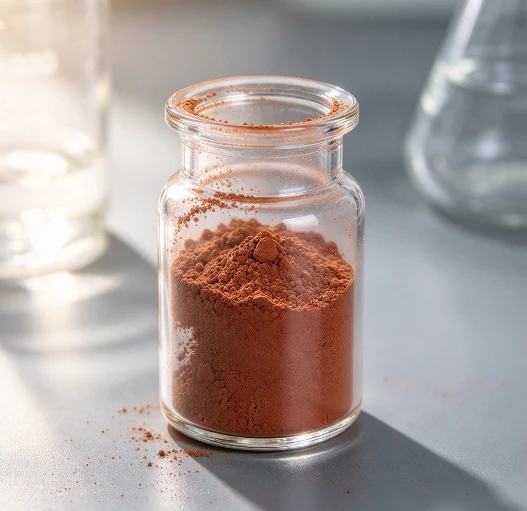
Appearance: Red to dark red powder to crystal
Isotope-Labeled: 6PPD-quinone-d5, 6PPD-quinone-¹³C₆ available
Packaging: 1 mg / 5 mg (lab trial); 0.1 g / 0.25 g / 1 g / 5 g / 10 g / 25 g (bulk); custom available
MOQ: 1 mg (lab trial) / 0.1 g (bulk)
Lead Time: 3–7 business days from stock
Origin: Zhengzhou, China | COA & SDS with every shipment
Worldwide Delivery: DHL / FedEx / air / sea
- Worldwide Delivery
- Quality Assurance
- 24/7 Customer Service
Product Introduction
6PPD-quinone CAS 2754428-18-5 | Tire-Derived Environmental Contaminant | Analytical Standard | China Manufacturer
Tire-Derived Contaminant · LC-MS/MS Standard · Isotope-Labeled Options · COA & SDS
PURITY (HPLC)
≥ 98%
HPLC verified
ISOTOPE OPTIONS
d5 / ¹³C₆
Internal standards
CONCENTRATION
100 μg/mL
In acetonitrile
PACKAGING
1 mg – 25 g
Lab trial to bulk
Request COA/SDS | Technical Questions? Visit FAQ
Response within 12 hours · COA & SDS with every shipment
For laboratory and environmental testing use only. Not for human or animal consumption.
Product Overview: 6PPD-quinone (CAS 2754428-18-5)
6PPD-quinone, CAS 2754428-18-5, is the primary ozonation transformation product of 6PPD, the rubber antioxidant widely used in vehicle tires. When 6PPD reacts with atmospheric ozone, it converts to 6PPD-quinone, which enters the environment through tire wear particles and roadway runoff. Alfa Chemical manufactures this grade at our Zhengzhou, China facility as a high-purity analytical standard for environmental monitoring and environmental toxicology studies.
The compound is acutely toxic to sensitive fish species at nanogram-per-liter concentrations. Coho salmon mortality in urban stormwater has been linked to 6PPD-quinone, with LC₅₀ values as low as 0.040 μg/L in some studies. This toxicity has driven regulatory action: the U.S. EPA is evaluating 6PPD and 6PPD-quinone under TSCA Section 6(a), and the EU REACH Annex XV restriction dossiers are assessing hazards.
For analytical laboratories, 6PPD-quinone serves as a calibration standard and isotope-dilution internal standard target. Our grade is ≥98% by HPLC, with COA reporting actual purity and spectral data. Isotope-labeled versions (6PPD-quinone-d5 and 6PPD-quinone-¹³C₆) are available for isotope dilution LC-MS/MS methods.
If your laboratory is developing or validating a method for 6PPD-Q in surface water, stormwater, or biological matrices, request a sample and test it against your existing calibration curve. This product is intended for laboratory and environmental testing use only.
Structure & Identity

p-Benzoquinone core with 4-methylpentan-2-yl and phenylamino substituents.
| Item | Value |
|---|---|
| Synonym |
6-PPDQ; N-(1,3-Dimethylbutyl)-N'-phenyl-p-phenylenediamine quinone
|
| Molecular Formula | C₁₈H₂₂N₂O₂ |
| Molecular Weight | 298.38 g/mol |
| SMILES |
CC(C)CC(C)NC1=CC(=O)C(NC2=CC=CC=C2)=CC1=O
|
| CAS Number |
2754428-18-5 |
| Chemical Class | p-Phenylenediamine quinone (PPD-Q) |
Environmental Analysis Applications
Each application below maps a real analytical challenge to the specific property of 6PPD-quinone that addresses it.
💧 Surface Water & Stormwater Monitoring
Challenge:
6PPD-Q occurs at ng/L to low μg/L levels in roadway runoff and receiving waters. Analytical methods must achieve sub-ng/L detection limits with reliable quantification in complex matrices.
How this standard helps:
≥98% HPLC purity ensures accurate calibration curves. The 100 μg/mL acetonitrile solution is ready for direct dilution into LC-MS/MS mobile phase without weighing error.
Result:
Quantification of 6PPD-Q in surface water, stormwater, and wastewater effluent.
⚗️ Isotope Dilution LC-MS/MS
Challenge:
Matrix effects in environmental samples cause ion suppression or enhancement. Isotope dilution is the standard approach, but it requires a matched isotope-labeled internal standard.
How this standard helps:
6PPD-quinone-d5 and 6PPD-quinone-¹³C₆ are available as matched internal standards. The ¹³C₆ version is specified in US EPA Draft Method 1634 for isotope dilution LC-MS/MS.
Result:
Accurate quantification even in high-matrix samples, with recovery correction built into the method.
🐟 Aquatic Toxicity Testing
Challenge:
6PPD-Q is acutely toxic to coho salmon (LC₅₀ ~0.04 μg/L), rainbow trout, and brook trout, but not to all fish species. Analysts need a reliable standard to prepare test concentrations and verify nominal vs. measured values.
How this standard helps:
High-purity solid allows accurate preparation of test solutions across a wide concentration range. The COA reports actual purity so concentration calculations are traceable.
Result:
Reproducible aquatic toxicity data and defensible concentration-response curves for regulatory submissions.
📊 Method Development & Validation
Challenge:
New methods for 6PPD-Q are being standardized globally. China's T/SZAEM 0004-2025 specifies online SPE-LC-MS/MS for water samples. Laboratories need a standard that supports method development and cross-validation.
How this standard helps:
Available in both solid (for spiking and recovery studies) and solution (for calibration) formats. Isotope-labeled versions enable isotope dilution method validation.
Result:
Faster method validation with traceable standards and documented purity.
Literature Reference Data
The following data are from published literature and are provided for reference only. Not batch-specific data.
| Parameter | Literature Value | Source |
|---|---|---|
| Coho salmon LC₅₀ | 0.040 μg/L | Washington State Dept. of Ecology / peer-reviewed studies |
| Rainbow trout LC₅₀ | 0.59 μg/L | Szabo-Scandic / Cayman Chemical datasheet |
| Brook trout LC₅₀ | 1.96 μg/L | Szabo-Scandic |
| Surface water max reported | 3.5 μg/L | Scientific Reports / peer-reviewed studies |
| Stormwater runoff max | 19 μg/L | Scientific Reports / peer-reviewed studies |
Regulatory & Compliance Status
6PPD and 6PPD-quinone are under active regulatory review in multiple jurisdictions. This section summarizes the current status as of October 2026.
🇺🇸 US TSCA
EPA granted a petition and committed to proceedings under TSCA Section 6(a) for 6PPD and 6PPD-quinone in tires. A proposed rule under TSCA Section 8(d) has been published.
🇪🇺 EU REACH
6PPD-quinone is being evaluated under REACH Annex XV restriction dossiers. The parent compound 6PPD is registered under UK REACH without specific 6PPD-Q restrictions as of the latest guidance.
🇨🇳 China Standards
T/SZAEM 0004-2025 specifies online SPE-LC-MS/MS for 6PPD-Q determination in water. This standard supports method harmonization for Chinese environmental laboratories.
Technical Specifications
Typical values for 6PPD-quinone analytical standard. Batch-specific COA reports actual HPLC purity, spectral data, and storage conditions.
| Item | Specification |
|---|---|
| Product Name | 6PPD-quinone (6-PPDQ) |
| CAS Number | 2754428-18-5 |
| Molecular Formula | C₁₈H₂₂N₂O₂ |
| Molecular Weight | 298.38 g/mol |
| Purity (HPLC) | ≥ 98% |
| Appearance | Red to dark red powder to crystal |
| Solubility | Soluble in acetonitrile, methanol, DMSO; slightly soluble in water |
| Storage | -20°C, protected from light, sealed container |
| Shelf Life | 24 months under recommended storage |
| Isotope-Labeled Versions | 6PPD-quinone-d5; 6PPD-quinone-¹³C₆ (available on request) |
| Packaging | 1 mg / 5 mg (lab trial); 0.1 g / 0.25 g / 1 g / 5 g / 10 g / 25 g (bulk); custom solution formats available |
| Documents | COA (HPLC purity, MS, NMR), SDS with every order |
Manufacturing & Quality Control at Our Zhengzhou Facility
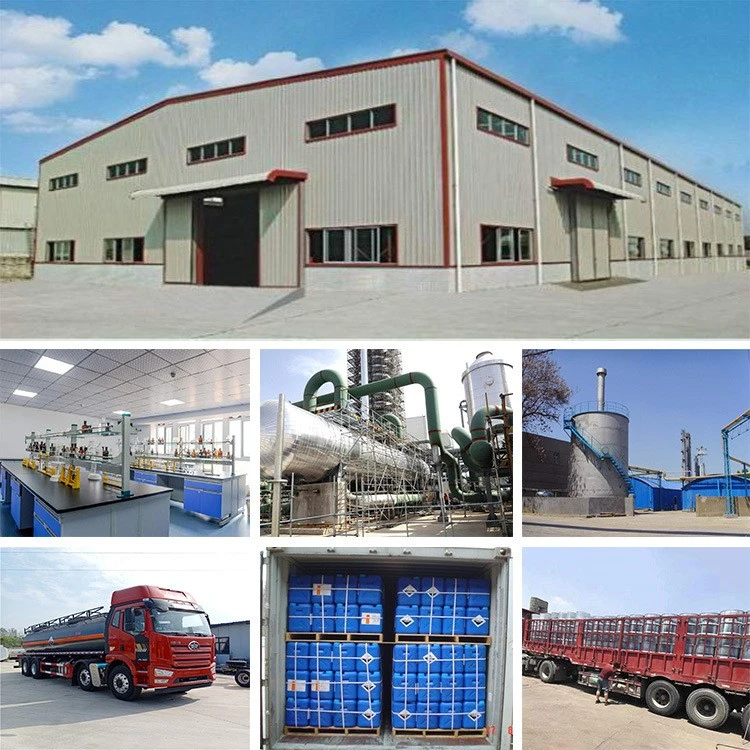
6PPD-quinone is manufactured at our Zhengzhou facility and purified by preparative HPLC. Each batch is tested for purity, identity, and residual solvent before release. Annual capacity is sufficient for both analytical-scale and bulk quantities.
Purity Verification
HPLC purity ≥98% with UV detection. MS and NMR confirmation of identity reported on COA.
Residual Solvent Control
Residual solvents controlled to ICH Q3C limits. Acetonitrile solution prepared gravimetrically for concentration accuracy.
Batch Traceability
Each batch assigned a unique lot number. Retained samples archived for 24 months. COA traceable to raw material lots.
Packaging & Shipping
Lab Trial
1 mg / 5 mg
Amber glass vial, sealed
Bulk Solid
0.1 g / 0.25 g / 1 g / 5 g / 10 g / 25 g
Amber glass or PTFE-lined container
Solution
Custom concentration in acetonitrile
Amber ampoule, sealed
Lead Time & Delivery
3–7 business days from stock
DHL / FedEx / air & sea freight
Why Choose Alfa Chemical
We manufacture 6PPD-quinone in-house with preparative HPLC purification - we don't just resell stock. That means we can provide batch-specific purity data, isotope-labeled versions, and packaging from 1 mg lab trial to 25 g bulk scale.
🔬 HPLC ≥98% Documented
COA reports actual HPLC purity, MS, and NMR data for each lot. Not a spec range - measured values.
⚖️ Isotope-Labeled Matching
6PPD-quinone-d5 and ¹³C₆ available from the same production line, ensuring matched isotope dilution pairs.
📄 COA + MS + NMR
Full characterization documentation with every order. Sample COA and SDS available before purchase.
💬 Method Support
Tell us your matrix and method (LC-MS/MS, GC-MS, online SPE). We will recommend the appropriate standard format and concentration.
Frequently Asked Questions
≥98% by HPLC. The COA reports actual measured purity for the specific lot, along with MS and NMR confirmation data. This purity level is suitable for calibration standards and isotope dilution internal standard applications.
Yes. We supply 6PPD-quinone-d5 and 6PPD-quinone-¹³C₆ for isotope dilution LC-MS/MS. The ¹³C₆ version is specified in US EPA Draft Method 1634. Isotope-labeled standards are produced from the same synthetic route as the unlabeled material, ensuring consistent labeling patterns.
Yes. Our 6PPD-quinone and its isotope-labeled versions are compatible with both methods. EPA Draft Method 1634 specifies 6PPD-quinone-¹³C₆ as the isotope dilution standard for LC-MS/MS. T/SZAEM 0004-2025 uses online SPE-LC-MS/MS for water samples. Tell us your method and we will recommend the appropriate standard format.
Store solid at -20°C, protected from light, in a sealed container. Solution standards in acetonitrile should be stored at -20°C and protected from light. Allow vials to equilibrate to room temperature before opening to prevent condensation. Shelf life is 24 months under recommended storage.
6PPD and 6PPD-quinone are under review by US EPA under TSCA Section 6(a) and by EU REACH under Annex XV. The compound is not classified as a pharmaceutical ingredient. It is supplied for laboratory and environmental testing use only, not for human or animal consumption.
Lab trial: 1 mg or 5 mg in amber glass vials. Bulk solid: 0.1 g, 0.25 g, 1 g, 5 g, 10 g, or 25 g in amber glass or PTFE-lined containers. Solution: custom concentration in acetonitrile in sealed ampoules. Stock orders ship in 3–7 business days. Custom packaging and bulk quantities are available. COA and SDS ship with every order; sample documentation is available before purchase.
Need pricing or a sample for 6PPD-quinone (CAS 2754428-18-5)?
Response within 12 hours. COA & SDS with every shipment.
Related Resources
Related Environmental Standards
6PPD (CAS 793-24-8) Antioxidant Standard
About Alfa Chemical
Alfa Chemical Co., Ltd is a manufacturer and supplier of environmental analytical standards, isotope-labeled compounds, and specialty material chemicals, based in Zhengzhou, China. We serve university laboratories, analytical testing organizations, and industrial customers worldwide. For documentation or technical support, contact Alfa Chemical.
Laboratory use only: For laboratory and environmental testing use only. Not for human or animal consumption.
Hot Tags: 6PPD-quinone (6-PPDQ) | CAS 2754428-18-5 | Environmental Analytical Standard | China Manufacturer, price, quotation, discount, in stock, for sale, Material Science
You Might Also Like
-

CAS:401901-10-8丨5,15-bis(4-bromophenyl)-10,20-diphen...
-

CAS:171429-39-3丨3-(5-carboxypentyl)-1,1,2-trimethyl-...
-

CAS:1633-82-5丨6-Hydroxy-2-naphthoic Acid
-

CAS:2033-24-1丨2,2-Dimethyl-1,3-dioxane-4,6-dione
-

CAS 1105578-57-1 | Dodecafluoroheptylpropyltrimethox...
-

CAS 157499-19-9 | 3-(PENTAFLUOROPHENYL)PROPYLDIMETHY...
