CAS NO: 7078-98-0 | QM-PH Polymerization Inhibitor | China Manufacturer
Product Name: QM-PH Polymerization Inhibitor
Synonyms: Inhibitor QM-PH; QM-PS; 4-Benzylidene-2,6-di-tert-butyl-2,5-cyclohexadien-1-one
CAS Number: 7078-98-0
Chemical Type: Para-quinone methide (p-QM)
Purity: 95% (typical; batch-specific assay on COA)
Molecular Formula: C21H26O
Appearance: Yellow to light brown crystalline solid
Application: High-temperature radical control for styrene distillation, storage, and butadiene stabilization.
Manufacturer: Alfa Chemical (Zhengzhou, China)
For industrial use only.
QM-PH Polymerization Inhibitor | CAS 7078-98-0 | China Manufacturer
95% solid p-QM inhibitor for styrene distillation and hot-process radical control
⚠️
Conventional retarders lose grip above 100°C. Radical generation can outrun the inhibitor, building polymer fouling on trays and heat exchangers. The cost is unplanned shutdowns, cleaning cycles, and lost throughput.
QM-PH (CAS 7078-98-0) is a high-purity para-quinone methide (p-QM) polymerization inhibitor, chemically identified as 4-Benzylidene-2,6-di-tert-butyl-2,5-cyclohexadien-1-one. Unlike conventional hindered phenols that rely on hydrogen donation, QM-PH directly traps radical intermediates to halt chain growth. This mechanism makes it highly effective at 60–170°C - a temperature window where standard retarders typically fail.
It is specifically engineered for styrene distillation, storage, and transport, as well as butadiene and acrylate monomer stabilization. Alfa Chemical supplies this 95% solid grade from our Zhengzhou, China facility, ensuring consistent batch-to-batch performance backed by GHS-compliant SDS and lot-specific COA data. For plants evaluating a safe, nitrogen-free switch from DNBP retarders, the technical data and staged co-injection protocols on this page are designed to de-risk your transition.
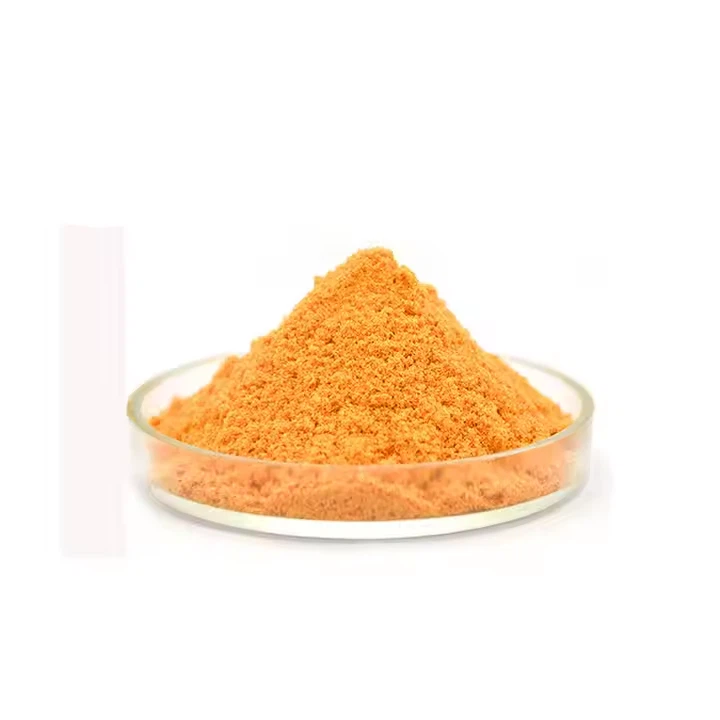
Schematic illustration of the 95% solid QM-PH grade, designed for high-temperature distillation and monomer stabilization. Actual product appearance may vary.
Want to see the actual HPLC chromatogram and impurity profile for your specific lot?
429-460-4; also associated with 615-169-1 in some databases
Product Specification
Purity
95% (typical)
Appearance
Yellow to light brown crystalline solid
Operating Temp
60–170°C
GHS Classification (CLP Annex VI)
Skin Sens. 1 (H317); Aquatic Chronic 4 (H413). Signal word: Warning. GHS07. Some commercial databases additionally list H302/H315/H319/H335. Refer to the lot-specific SDS supplied with your shipment for the adopted classification.
Regulatory & Supply
Regulatory Status
Listed on IECSC (China), TSCA (USA), EU REACH (registered). Not listed on China Hazardous Chemicals Catalogue (2022) or China dual-use export control lists. Listed on KEMI PRIO (Sweden) phase-out list. Buyer verifies destination-market compliance.
Storage & Handling
Keep container tightly closed in a dry, well-ventilated place below 30°C. Protect from moisture and direct sunlight. Retest date confirmed on COA.
Regulatory status is provided for reference only. Final compliance determination rests with the buyer based on destination market and end use.
Need the batch-specific COA or a volume-terms indication for your site?
While specifications define the material, the data below demonstrates how it performs in actual styrene service. These are literature reference values; customer validation is required.
QM-PH Dose (ppm)
Styrene Polymerization (%)
0 (blank)
19.66
100
9.60
200
3.50
300
0.60
400
Near-complete inhibition
Co-inhibitor effect: QM-PH blended with triisopropanolamine (TIPA) at a 90:10 ratio, total dose 200 ppm, reduced styrene polymerization to 0.07% under the same test conditions. Blends with propoxylated ethylenediamine (PED) approached near-zero polymerization. Recommended co-inhibitor ratio is 90:10 to 95:5; amine fractions above 15% tend to reduce efficiency rather than improve it.
⚖️ QM-PH as a DNBP Alternative
Challenge: Dinitrophenol retarders have been the commercial standard, but they introduce nitrogen and carry their own hazard profile and effluent load.
How QM-PH differs: Nitrogen-free; hydrophobic by design; not regulated as dangerous goods for transport. Published industrial data puts average QM-PH consumption at 0.84 kg per ton of styrene vs 1.42 kg/t for DNBP - about 40% less inhibitor mass.
For procurement: Lower mass per ton means fewer drums to handle; no nitrogen slip to downstream catalysts; no hazmat freight surcharge.
🌡️ QM-PH vs TBC: Different Temperature Regimes
Challenge: 4-tert-Butylcatechol (TBC) works for ambient storage but loses activity in the distillation column.
How QM-PH differs: Designed for 60–170°C. It does not replace TBC in storage; it covers the hot sections.
For procurement: Many plants run both - TBC for tank farm, QM-PH for column. The two are complementary line items, not substitutes.
Literature reference data. Typical values. Actual performance varies by monomer system and must be validated in the customer's process.
Want the full data pack - mechanism, dose-response, co-inhibitor ratios, and DNBP comparison?
Challenge: Diene and acrylate monomers are prone to popcorn polymerization and gel formation during storage.
How QM-PH helps: Radical scavenging activity interrupts the propagation step, without introducing nitrogen.
Result: Extended storage stability; reduced polymer deposits in transfer lines.
⚙️ Synthetic Rubber Anti-Gelation
Challenge: CR, SBR, EPDM, and HVBR production can suffer from premature crosslinking during monomer recovery.
How QM-PH helps: Inhibits radical-initiated gelation without interfering with vulcanization chemistry.
Result: Cleaner polymer recovery and fewer off-spec batches.
📦 Additional Industrial Uses
Lubricant antioxidant; UV coating stabilizer; polyurethane catalyst passivator; pesticide stabilizer formulations; ink stabilizer. For these applications, confirm dosage and compatibility against the specific formulation.
Switching from DNBP: Three-Stage Protocol
If you are replacing DNBP, a hard cutover is not recommended. The staged co-injection approach below establishes QM-PH residual concentration before the legacy retarder is reduced.
Stage 1 · Days 1–2
Keep DNBP and true inhibitor at existing rates. Start QM-PH co-injection at approximately 1.0 kg per ton of styrene.
Stage 2 · Days 3–6
Reduce DNBP to 50% of original dosage. Maintain QM-PH and true inhibitor. QM-PH begins to carry the main load.
Stage 3 · Day 7 onward
Stop DNBP. Optimize QM-PH to approximately 0.84 kg per ton of styrene, guided by column bottom analysis.
Control targets: QM-PH residual in the column bottom typically maintained at 500–800 μg/g. Polymer content: feed ≤100 μg/g; column bottom ≤300 μg/g. These are starting targets; final rates are confirmed against your column conditions.
For procurement: these targets translate to a predictable inhibitor consumption rate, typically confirmed against your first production lot. No hazmat freight, no nitrogen slip to downstream catalysts.
Common switching question: Will there be a protection gap? The staged protocol is designed to avoid one. QM-PH reaches effective residual concentration during Stage 1, before DNBP is reduced. If your column has fouling history during transitions, the co-injection window can be extended.
Planning a DNBP replacement? Share your column conditions and we will outline a customized switching approach.
The difficulty with QM-PH is not sourcing a drum. It is getting a grade that behaves consistently batch to batch, with documentation that survives procurement and regulatory review.
🔬 Why 95% solid, not a solution grade
The solid grade lets you dissolve in the solvent that fits your injection system, rather than paying to ship ethylbenzene. It also avoids the flammability and storage constraints of a solution grade. Solution grades remain available on request.
📋 Assay and impurity profile on every COA
Batch-to-batch assay drift is the actual risk in QM-PH service - it shows up as inconsistent inhibition in the column. The COA reports the measured assay for the lot you receive, not a catalogue claim.
🔄 Staged DNBP transition, not a hard cutover
We share the co-injection framework and control targets used in industrial practice. Final rates are confirmed against your column data - not copied from a generic table.
Packaging & Shipping
📦 Packaging Options
Standard: 25 kg fiber drum with double inner liner
Bulk: 500 kg or 1,000 kg bulk bag on request
Trial/Sample: 1 kg foil bag, 5–10 kg carton on request
Custom labeling and nitrogen purging available upon request.
🚚 Logistics & Storage
Shipping Methods: By courier (DHL/FedEx), air freight, or sea freight. Shipping terms confirmed upon order based on volume and destination.
Transport Class: Not regulated as dangerous goods (UN# N/A). No hazmat surcharges.
Storage: Keep tightly closed in a dry, well-ventilated area below 30°C. Protect from moisture and direct sunlight.
Frequently Asked Questions
Q: Why 95% solid instead of a solution grade?
A:The solid grade gives you formulation flexibility: you dissolve in the solvent that fits your injection system, rather than paying to ship solvent. It also avoids the flammability and storage constraints of ethylbenzene solution grades.
Q: How does QM-PH compare with TBC?
A:TBC is effective for ambient-temperature storage stabilization. It is not designed for high-temperature distillation. QM-PH covers the 60–170°C window where TBC loses activity. They are complementary, not interchangeable.
Q: Is there a protection gap when switching from DNBP?
A:The staged co-injection protocol is built to avoid one. QM-PH reaches effective residual concentration during the initial co-injection phase, before DNBP is reduced. If your column has fouling history, the co-injection window can be extended.
Q: What does the regulatory status look like?
A:Listed on IECSC, TSCA, and EU REACH. CLP Annex VI classification: Skin Sens. 1 (H317) and Aquatic Chronic 4 (H413), signal word Warning. Also on the KEMI PRIO phase-out list. Buyers verify destination-market requirements.
Q: What are the MOQ, lead time, and payment terms?
A:Standard MOQ is 1 drum (25 kg), with lead times typically 7-14 days. Payment terms are usually T/T or L/C. Final terms depend on volume, destination, and contract type.
Q: How should the solid grade be stored?
A:Keep the container tightly closed, light-proof, in a dry, well-ventilated area below 30°C, protected from moisture. The solid is hygroscopic and can cake if exposed to humid air.
Q: What is the shelf life, and how should it be handled after opening?
A:Typical shelf life for CAS 7078-98-0 is 24 months from the date of manufacture when stored sealed and protected from light and moisture. After opening, reseal tightly and use under dry conditions.
Q: Is this product regulated for transport (UN number)?
A:Not regulated as dangerous goods. UN# N/A, Class N/A, Packing Group N/A. No hazmat fees apply for standard courier, air, or sea freight.
Ready to validate QM-PH against your column conditions?
Tell us your current inhibitor consumption and column bottom polymer target. We will respond with a COA-matched sample plan and a switching outline.
For room-temperature monomer stabilization (styrene, acrylates, butadiene), a different radical chemistry applies. We also supply TEMPO-type inhibitors (e.g., CAS 2896-70-0).
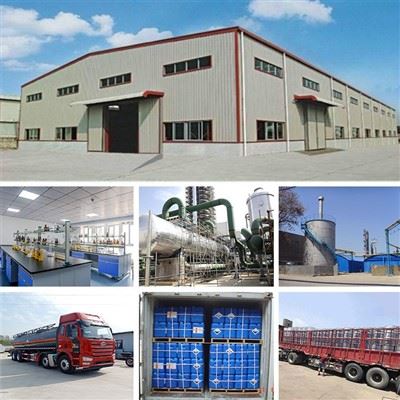
QM-PH (CAS 7078-98-0) is manufactured at our Zhengzhou facility. If you need a technical data pack or want to discuss bulk terms, talk to our team directly.
Alfa Chemical is a manufacturer and supplier of specialty chemicals based in Zhengzhou, Henan, China. Our focus is on intermediates and functional additives where specification consistency and documentation quality matter as much as price. For QM-PH (CAS 7078-98-0) and related polymerization inhibitors, the sales team works from batch COA data, not a generic catalogue sheet.
Disclaimer: For industrial use only. Not for pharmaceutical, medical, or direct human or animal use. All values are typical; batch-specific analytical data is provided on the Certificate of Analysis. Final terms are confirmed upon order and may vary by volume, destination, and contract type. Regulatory status is provided for reference only; buyers must verify destination-market compliance for their specific end use.