

Formulating with CPC: Charge, pH, and the Ingredients That Eat Your Active
Oct 08, 2026
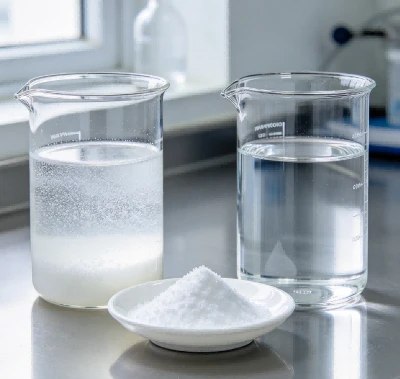
Cetylpyridinium Chloride (CPC) is a cationic antiseptic widely used in oral care formulations. Its antimicrobial activity depends on the charge environment of the formula.
The formula says 0.1% cetylpyridinium chloride. The COA says ≥99% purity. Release testing passes. Six months later the customer sends back a mouthwash sample and asks why it stopped working. The label hasn't changed. The CPC hasn't degraded. Something in the formula has been quietly consuming it since day one.
This article is about that something. Most formulators know Cetylpyridinium Chloride (CAS 123-03-5) is a cationic antiseptic. Fewer realize how narrow the window is between "technically present" and "actually active." The difference is usually not the CPC itself. It is the charge environment around it, the pH it sits in, and the excipients that bind to it before it ever reaches a bacterial membrane. Alfa Chemical manufactures CPC (CAS 123-03-5) in Zhengzhou, China for oral care formulators worldwide.
The Cationic Problem
CPC's antimicrobial action starts with electrostatics. The molecule has a permanent positive charge on its pyridinium nitrogen. Bacterial cell surfaces carry a net negative charge from teichoic acids, lipopolysaccharides, and membrane phospholipids. The CPC cation adsorbs onto that surface, inserts its cetyl chain into the lipid bilayer, and disrupts membrane integrity. The cell leaks. It dies.
This mechanism is fast. A 50 mg/100 mL CPC solution - the concentration used in commercial mouthrinses - sterilizes all tested oral bacterial strains within one minute. At 3 mg/100 mL, seven of ten strains are killed within three minutes. The activity is not marginal. When CPC works, it works quickly.
The problem is that almost every other ingredient in a toothpaste or mouthwash is competing for the same electrostatic binding sites. Anionic surfactants, anionic thickeners, phosphate salts, and some abrasives all carry negative charge. CPC does not distinguish between a bacterial membrane and a sulfate headgroup. It binds to whatever is negatively charged and available. Once bound to a formulation excipient, it is no longer available for antimicrobial action.
SLS and the Insoluble Complex
Sodium lauryl sulfate (SLS) is the most common surfactant in toothpaste. When CPC and SLS are mixed in an aqueous phase, they form an insoluble complex. The complex is not a minor loss. In a typical toothpaste containing 1–2% SLS, the majority of the CPC can be rendered inactive within hours of mixing.
The mechanism is straightforward. SLS is an anionic surfactant with a sulfate headgroup. CPC is a cationic surfactant with a pyridinium headgroup. Oppositely charged surfactants in water do what oppositely charged surfactants do: they associate, form ion pairs, and precipitate out of solution. The precipitate is still in the tube. It is just no longer in the saliva.
If you are building a CPC toothpaste and your surfactant system is SLS-based, the antimicrobial claim is compromised regardless of the CPC concentration on the label. The only reliable fixes are:
- Replace SLS with a non-ionic surfactant. Poloxamer 407, PEG-40 hydrogenated castor oil, and polysorbate 20 are commonly used with CPC without loss of activity. These surfactants have no net charge and do not compete for CPC binding sites.
- Use an amphoteric surfactant as the primary. Cocamidopropyl betaine carries both positive and negative charges but behaves as a zwitterion at typical formulation pH. It is compatible with CPC at practical use levels.
- If SLS is non-negotiable for cost or foaming reasons, accept that the CPC will underperform. Encapsulation approaches exist but add processing complexity and cost that rarely pencil out for commodity oral care.
The same logic applies to anionic thickeners. Sodium carboxymethylcellulose (CMC) and carbomer bind CPC through their carboxylate groups. Xanthan gum, while less anionic, can still interact depending on pH and concentration. Non-ionic thickeners - hydroxyethylcellulose, hydroxypropyl methylcellulose, or modified starches - avoid the problem entirely.
Silica, Calcium Carbonate, and the Abrasive Question
Abrasives matter more than most formulators expect. Some grades of hydrated silica and calcium carbonate adsorb CPC onto their particle surfaces, reducing the amount of free active in the aqueous phase.
This is not a uniform problem. Silica manufacturers have developed grades with surface treatments that reduce CPC binding. Precipitated silicas with surface modification can achieve CPC compatibility values above 85–90%, meaning most of the CPC remains free in solution. Standard silica grades without modification will bind a larger fraction.
Calcium carbonate-based abrasives are a harder case. They tend to push formulation pH above 8, which is outside CPC's stability window, and their surface chemistry is more reactive toward cationic species. If CPC is the primary antimicrobial active, a silica-based abrasive system is almost always the better choice.
pH: Two Constraints, One Window
CPC's useful pH range is narrow because stability and activity pull in opposite directions.
Below pH 5.0, the antimicrobial activity of CPC declines. The mechanism is not fully understood, but the practical observation is consistent: acidic conditions reduce the rate and extent of bacterial killing.
Above pH 8.0, CPC solubility drops and precipitation risk increases. At high pH, the pyridinium cation can be neutralized by hydroxide, forming the free base, which is poorly water-soluble. Once CPC precipitates, it is functionally gone.
The optimal window is pH 5.5–7.5. For mouthrinse formulations, a citrate or phosphate buffer at pH 6.0–6.5 is standard practice. Phosphate buffers have an additional advantage: they do not introduce multivalent anions that could interact with CPC. Monovalent acid systems - phosphoric acid or hydrochloric acid for pH adjustment - are preferred over multivalent acids like citric acid or EDTA, which can chelate or bind cationic species.
For toothpaste, the pH is often dictated by the abrasive system. Silica-based abrasives allow neutral pH. Calcium carbonate forces alkaline pH. If the formulation requires calcium carbonate for cost or texture reasons, CPC is the wrong antimicrobial active for that system.
Zinc: The One Co-Active That Helps
Most co-actives either do nothing for CPC or interfere with it. Zinc is the exception.
Zinc salts - zinc chloride, zinc lactate, zinc citrate - work through a different mechanism than CPC. Zinc ions inhibit bacterial growth and directly neutralize volatile sulfur compounds (VSCs), the primary cause of oral malodor. CPC kills bacteria and reduces VSC production indirectly by reducing the bacterial population. When combined, the two actives address halitosis through complementary pathways.
The synergy has been documented in vitro. Against Aggregatibacter actinomycetemcomitans, a key periodontal pathogen and VSC producer, the combination of CPC and ZnCl₂ showed synergistic inhibition - the effect was greater than the sum of the individual activities. Clinically, mouthrinses containing both CPC and zinc lactate have shown anti-malodor efficacy that exceeds what either active delivers alone.
The compatibility caveat: zinc salts are cationic. They do not compete with CPC for anionic binding sites in the way SLS does. The two can coexist in the same aqueous phase without forming an insoluble complex.
What Doesn't Help
Chlorhexidine. Combining CPC with chlorhexidine offers no antimicrobial benefit and increases the risk of mucosal irritation. The two actives target similar mechanisms, and their substantivity profiles do not complement each other. If you need chlorhexidine-level efficacy, use chlorhexidine. If you need chlorhexidine-level tolerability, use CPC. Mixing them gives you the worst of both.
Anionic polymers for tartar control. Pyrophosphates and polyphosphates are common anti-tartar agents and strong chelators. They can bind CPC and reduce its availability. If anti-tartar and antimicrobial claims are both required, test the combination carefully. The anti-tartar agent may be consuming the antimicrobial.
High ethanol levels. Ethanol is sometimes used to solubilize flavor oils or to add a "medicated" sensory effect. CPC is soluble in ethanol, but high ethanol concentrations can irritate oral mucosa and do not improve CPC performance. If ethanol is used, keep it below the level that causes stinging, and verify that the CPC remains in solution after the ethanol has evaporated from the oral cavity.
Use Levels by Product Type
Mouthwash. 0.05–0.1% CPC is standard. Clinical trials at 0.045–0.065% have demonstrated plaque reduction in the 25–35% range with minimal staining or taste disturbance. In China, the regulatory limit for mouthwash is 0.05%. For export markets, confirm the local limit before finalizing the formula.
Toothpaste. 0.1–0.5% CPC, with the actual amount of free (unbound) CPC being the number that matters. If the formula contains SLS or anionic thickeners, the labeled concentration overstates the effective concentration.
Lozenges and throat sprays. Typically 1.5 mg CPC per unit. The delivery format limits residence time, so the formulation challenge is different: maintaining CPC availability in a solid or sprayable matrix rather than an aqueous solution.
Hand cleansers and skin care. Up to 0.2% CPC. These formulations usually avoid SLS for skin compatibility reasons, which incidentally makes CPC compatibility easier.
A Sequencing Rule That Avoids Most Problems
When developing a CPC-based oral care product, the order in which you lock formulation decisions determines whether you will have a compatibility problem.
- Lock the surfactant system first. If the surfactant is anionic, no amount of pH tuning or CPC concentration adjustment will recover the lost activity. Choose non-ionic or amphoteric before you write anything else into the formula.
- Lock the thickener second. Match the thickener charge to the surfactant system. Non-ionic thickeners are the safe default.
- Lock the abrasive third. Silica with low CPC binding, or a silica grade specifically tested for CPC compatibility.
- Lock pH fourth. Target pH 6.0–6.5. Buffer with citrate or phosphate. Avoid multivalent acids.
- Add CPC last, pre-dissolved in a small amount of purified water. Adding CPC late in the mixing process minimizes localized binding to thickeners or abrasives before they are fully hydrated.
This sequence is not a guarantee against every interaction, but it eliminates the most common failure modes. Retrofitting compatibility into a formula that already contains SLS is expensive and rarely fully successful.
What to Ask a Supplier
If you are sourcing CPC from a China manufacturer, the technical questions that matter are not about price or packaging. They are about the batch data.
Ask for the assay by HPLC, not a range. Ask for the water content. CPC monohydrate has a theoretical water content around 5.3%. Anhydrous CPC will read lower. The form matters for solubility and stability. Ask for residue on ignition and heavy metals. The Ph. Eur. limit for heavy metals is 20 ppm. Ask whether the material has been tested for compatibility with common oral care excipients - not every supplier will have this data, but the ones who do are the ones who understand the product.
The COA should include actual measured values, not specifications. A COA that says "≥99%" without a number is a template, not a batch record.
Sourcing CPC from Alfa Chemical
Alfa Chemical supplies Cetylpyridinium Chloride (CAS 123-03-5) from Zhengzhou, China, as a white crystalline powder with ≥99% assay by HPLC. Every batch ships with a batch-specific COA and SDS. Related organic intermediates are listed under Organic Chemistry. For formulation questions or sample requests, contact our technical team.
This information is for R&D and formulation use only. Users are responsible for verifying compliance with local regulations. Handle in accordance with the SDS.
You Might Also Like
-

CAS 6375-46-8 | 3-(N,N-Diethylamino)acetanilide
-

CAS:411222-01-0 | Name:1-hexyl-2,3-dimethylimidazolium Br...
-
![CAS:419572-18-2 | Exo-3-Boc-3-azabicyclo[3.1.0]hexane-6-methanol](/uploads/202335855/small/cas-419572-18-2-exo-3-boc-3-azabicyclo-3-1-0a6a335a53-83bc-49fb-9918-caff55496e80.jpg?size=384x0)
CAS:419572-18-2 | Exo-3-Boc-3-azabicyclo[3.1.0]hexane-6-m...
-

CAS:81565-18-6丨2-Chloro-4-(trifluoromethyl)pyridine
-

CAS:7321-55-3丨DIMETHYLMALONONITRILE
-
CAS:1260666-80-5 | 5-Fluoroisoindolin-1-one